
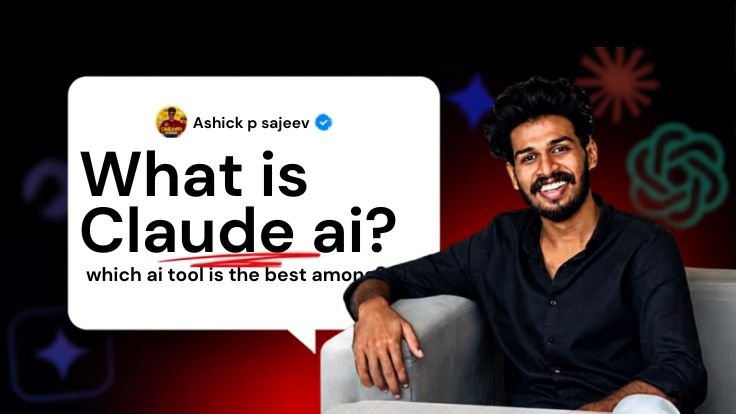
What Is Claude AI? The Complete Guide for Marketers and Builders
When you type “What is Claude AI?” into Google, you typically find the same four surface-level sentences across tech blogs: it is an AI chatbot developed by Anthropic that writes text. While that definition works for a casual user, it falls short for growth teams and engineers searching for high-performing Claude AI for Marketers and builders to scale real-world workflows. The most effective mental model is to treat Claude AI as a structured reasoning engine rather than a simple lookup database. While standard search engines retrieve static data, Claude processes complex problems using deep contextual inputs—whether you feed it a multi-page brand voice guideline, competitor gap analysis, dynamic code repository, or raw customer interview transcripts. Understanding this fundamental difference shapes how you prompt the model, what quality of output you can expect, and how you evaluate Claude AI vs ChatGPT, Gemini, Perplexity, Copilot, or Llama. In this comprehensive guide to Claude AI for Marketers and builders, we break down everything you need to dominate your niche: Foundations & Core Architecture: What Claude AI Actually Is Claude AI is a family of AI models and applications built by Anthropic, an AI safety and research company founded in 2021 by former OpenAI researchers, including siblings Dario and Daniela Amodei. Claude can hold extended conversations, draft and edit long-form content, analyze documents and images, write and debug code, and carry out multi-step tasks inside connected apps and tools. At a technical level, Claude AI works like other large language models: it’s trained on enormous volumes of text and learns to predict the next unit of language in a sequence. That mechanism is what lets it write, summarize, translate, and carry a coherent argument across thousands of words. What separates Claude from a generic autocomplete engine is how it uses that mechanism — holding onto instructions, tone, and constraints across a genuinely long interaction instead of drifting after a few paragraphs. Anthropic’s Safety-First Philosophy Anthropic is headquartered in San Francisco and frames its mission around building reliable, interpretable, and steerable AI systems. That is not just marketing language — it shows up directly in day-to-day Claude AI features. When testing Claude AI vs ChatGPT, Claude AI tends to be more conservative than some competing chatbots when a request is ambiguous or carries real-world risk, and it is explicit about uncertainty rather than confidently guessing. For agencies and in-house teams analyzing what is Claude AI and putting it in front of client work, that trade-off is worth knowing before you build a dependency on it: you get more caution, not less How Claude Handles Massive Context Windows Context window size is the single biggest practical differentiator between AI tools, and it is among the most vital Claude AI features that most beginner guides skip. Claude AI’s flagship models — Sonnet 5 and Opus 5 — support up to a 1 million token context window on paid plans, according to Anthropic’s own documentation. Haiku 4.5, the fastest and cheapest model in the lineup, runs a 200,000 token window. In plain terms, a million tokens is roughly 750,000 words — enough to hold an entire codebase, a full year of internal documentation, or dozens of long-form articles in a single conversation. In any practical comparison of Claude AI vs ChatGPT, this means you can paste in a client’s entire brand style guide, three competitor teardown documents, and a full keyword matrix in one go, and Claude AI will reason across all of it at once instead of forgetting the brand guide by the time it reaches the keyword list. That is the foundational reason behind what is Claude AI and why the model performs so differently from a “write me a blog post” one-line prompt — the model is not limited by memory the way a shorter-context tool is, making these massive memory capabilities standard across all advanced Claude AI features. Claude AI Features and Capabilities: A Deep-Dive Breakdown Here’s a functional breakdown of what’s actually inside Claude AI today, beyond the chat box. Chat & Writing The core experience: long-form content drafting, editing, brainstorming, and document or image analysis, available on web, iOS, Android, and desktop. This is where most marketers spend the bulk of their time, and where Claude AI’s context handling shows up most directly — holding tone and structure consistently across a 2,000-word pillar page instead of degrading into generic phrasing by paragraph six. Claude Code An agentic coding tool that builds, debugs, and refactors software from plain-language instructions rather than requiring you to write every line yourself. It runs in the terminal, in IDE integrations, and inside the desktop app, and it shares its usage pool with the rest of a Claude subscription. For technical marketers and builders, this is the bridge between “I have a content strategy” and “I have a working landing page or schema implementation.” Claude Cowork An agentic assistant built for non-developers that works directly inside your files, folders, and connected apps to complete multi-step tasks — organizing a messy folder, building a spreadsheet with working formulas, or drafting a set of documents from raw notes. Where Chat is a conversation, Cowork is a working session: you describe the outcome, and Claude plans and executes it, checking in with you at key decision points rather than requiring step-by-step instructions. Artifacts A dedicated space for generating and iterating on a single reusable output — a document, a piece of code, an interactive prototype — separate from the back-and-forth of the chat itself. For content teams, this is where a drafted article, a data visualization, or a client-facing deliverable actually lives and gets refined. Projects Projects let you organize related chats, documents, and instructions into one persistent workspace. Instead of re-explaining a client’s brand voice or a campaign’s keyword strategy in every new conversation, you set it once at the project level and every chat inside that project inherits the context. Memory & Skills Memory lets Claude retain relevant context across separate sessions rather than starting from zero every